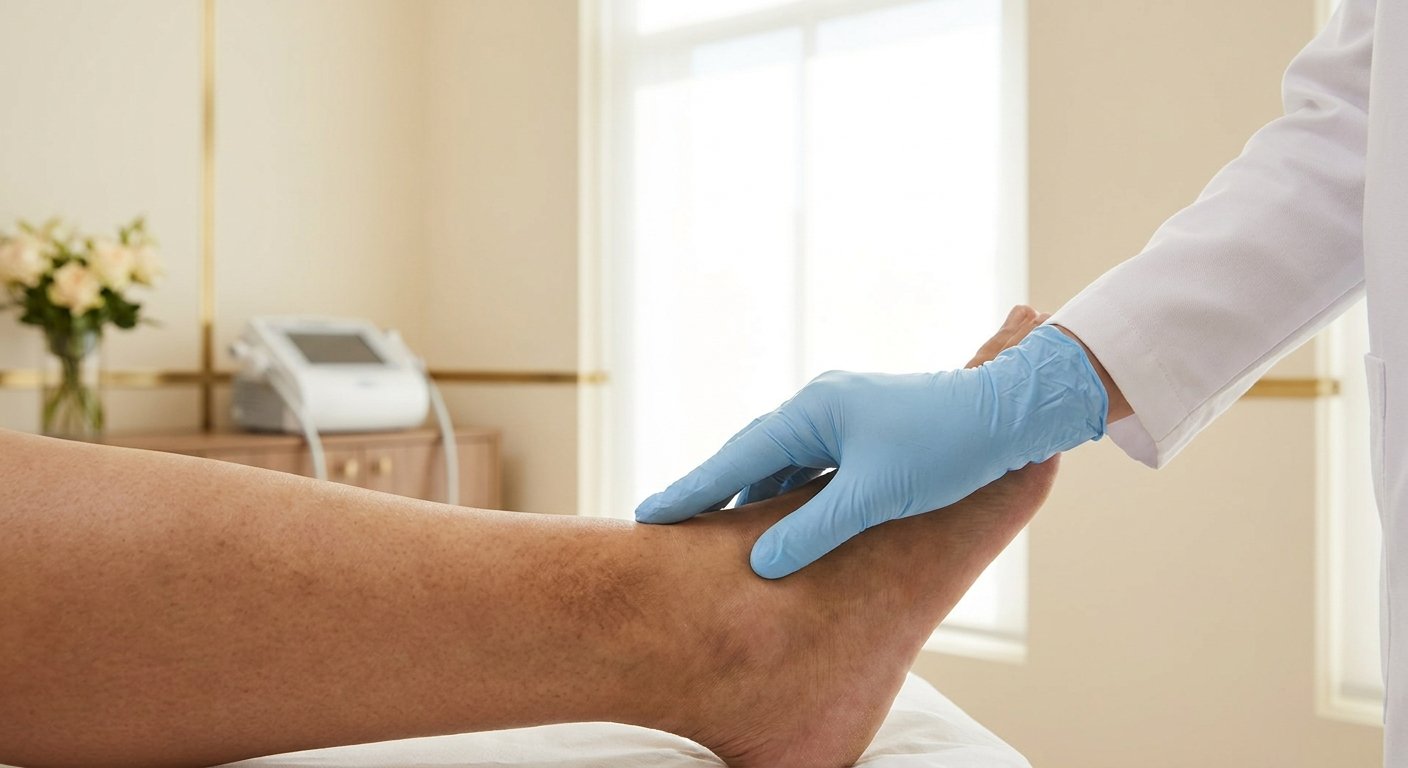
Lipodermatosclerosis
Lipodermatosclerosis is a hardening, inflammation, and discoloration of the skin on the lower legs, usually driven by chronic venous insufficiency. At Charming Skin & Vein Clinics, we treat both the skin changes and the underlying vein problem that causes them.
What causes lipodermatosclerosis?
Lipodermatosclerosis occurs when veins in the lower legs cannot efficiently circulate blood back to the heart, causing blood to pool and pressure to build in the veins. This chronic venous insufficiency leads to inflammation and thickening of the skin and tissues. Common contributing causes include:
- Chronic venous insufficiency — the primary cause, where valves in the leg veins fail to function properly, leading to blood pooling and tissue inflammation.
- Varicose veins — swollen, twisted veins that contribute to poor circulation and skin changes in the lower legs.
- Deep vein thrombosis (DVT) — a blood clot in the deep veins that can lead to venous insufficiency and lipodermatosclerosis.
Symptoms of lipodermatosclerosis
Lipodermatosclerosis primarily affects the lower legs, causing visible skin changes and discomfort. Symptoms include:
- Hardening and thickening of the skin — the skin on the lower legs becomes firm, tight, and may feel leathery.
- Discoloration — the affected area often turns reddish-brown or purplish, especially around the ankles.
- Pain and tenderness — the legs may feel sore or painful, particularly after standing for long periods.
- Swelling in the legs — fluid buildup can cause the legs to swell and add discomfort.
- Decreased mobility — skin tightening can make it harder to move the ankle or walk comfortably.
- Leg ulcers — in severe cases, open sores may form on the skin.
Without treatment, lipodermatosclerosis can lead to long-term skin damage, chronic pain, and the formation of venous ulcers.
Why treat lipodermatosclerosis?
Treating lipodermatosclerosis early is important to help prevent more severe complications such as skin ulcers and permanent tissue damage. Effective treatment not only eases pain and discomfort but also helps improve circulation, reducing the risk of further damage to the legs.
Treatment options for lipodermatosclerosis
At Charming Skin & Vein Clinics, we offer a range of treatments to manage both lipodermatosclerosis and the underlying venous insufficiency:
- Compression therapy — compression stockings or bandages reduce swelling and improve blood flow to relieve symptoms.
- Endovenous laser (EVLA) — a minimally invasive treatment that closes malfunctioning veins, improving circulation and reducing the pressure that causes lipodermatosclerosis.
- Radiofrequency ablation (RFA) — uses heat to seal damaged veins, improving blood flow and reducing inflammation in the legs.
- Topical treatments — steroid creams and other topical medications can help reduce skin inflammation and improve the appearance of affected areas.
- Wound care — when leg ulcers have formed, proper wound care is essential to prevent infection and promote healing.
Our treatments are designed to target both the symptoms and the underlying causes of lipodermatosclerosis, supporting long-term relief and helping prevent further complications.
Prevention and self-care tips
To help manage and slow the progression of lipodermatosclerosis, these self-care strategies can help:
- Wear compression stockings — compression garments improve circulation and help prevent blood from pooling in the veins.
- Elevate your legs — raising your legs periodically through the day can reduce swelling and promote better blood flow.
- Stay active — regular, low-impact exercise like walking helps prevent venous insufficiency from worsening.
- Maintain a healthy weight — keeping your weight in a healthy range reduces pressure on your veins.
How we evaluate and treat it
Lipodermatosclerosis is usually a sign of long-standing venous insufficiency, where blood pools in the lower leg and causes the skin and underlying tissue to harden, discolor, and tighten. We begin by mapping how your leg veins are working so treatment targets the underlying cause, not just the skin changes. Dr. Abboud brings more than 20 years of experience caring for venous disease. Depending on what the evaluation shows, care may include:
- Ultrasound vein diagnosis to identify which veins are refluxing and driving the tissue changes
- Compression therapy to reduce swelling and support the skin as it heals
- Varicose vein treatment when underlying varicose veins are contributing to the venous pressure
- Endovenous laser (EVLA) to close the malfunctioning vein behind the venous insufficiency
Quick answer
Lipodermatosclerosis is a hardening and discoloration of the skin and underlying fat on the lower legs, usually caused by long-standing chronic venous insufficiency and the higher vein pressure that comes with it. Treating the underlying vein problem can ease the inflammation, soften the skin over time, and help prevent skin breakdown.
Related vein conditions
Common questions
When should I see a vein doctor about lipodermatosclerosis?
If you notice firm, darkened, or tightening skin on the lower leg or ankle, along with swelling, aching, or skin that does not heal well, it is worth having your veins evaluated. These changes often point to underlying venous insufficiency, and addressing it early can help protect the skin from further damage.
Is treatment covered by insurance?
Most PPO plans and Medicare cover treatment for symptomatic veins, including the venous insufficiency that drives lipodermatosclerosis. Our team can review your coverage with you before any procedure. Purely cosmetic vein work is self-pay.
What should I expect at a free vein screening?
A free vein screening is a calm, informational visit. We review your symptoms and history, look at the affected skin, and discuss whether an ultrasound evaluation makes sense. There is no obligation, and you will leave understanding your options and next steps.
Medically informed care
Vein care at Charming Skin & Vein Clinics is led by Dr. Abboud, who brings more than 20 years of medical experience — a graduate of the University of Damascus with residency training at Cook County Hospital and John H. Stroger Jr. Hospital in Chicago. This page is for general education, reviewed for accuracy, and is not a substitute for an in-person evaluation.
Because lipodermatosclerosis is driven by underlying venous disease, care often starts with an ultrasound vein diagnosis to map the affected veins, alongside compression therapy to reduce pressure and support the skin.
Trusted resources: MedlinePlus — Venous insufficiency, NIH NHLBI — Varicose Veins.
Book a Free Vein Screening or call us at 630-974-1400.