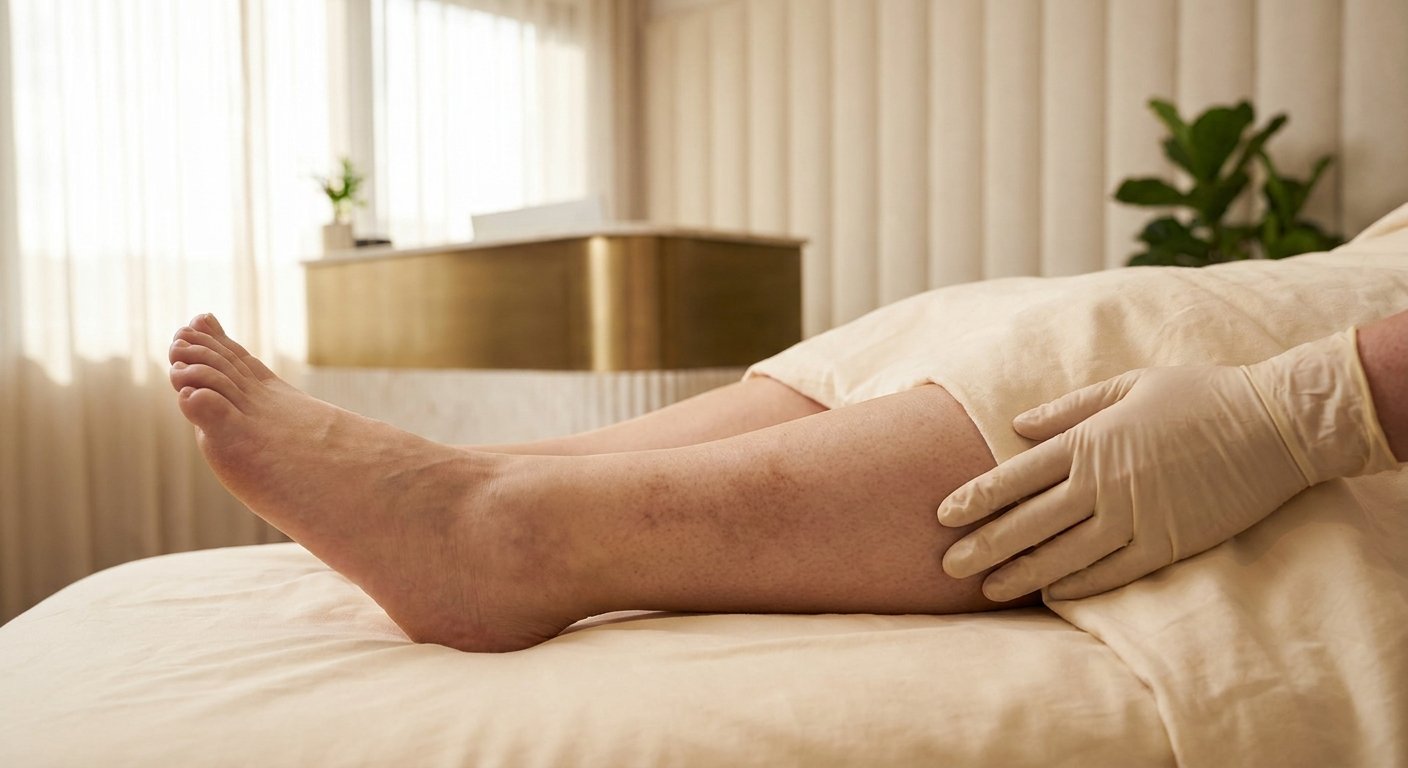
Vein-Related Skin Discoloration
Vein-related skin discoloration, or hyperpigmentation, is a reddish-brown darkening of the skin—usually around the lower legs and ankles—caused by blood pooling in weakened veins. At Charming Skin & Vein Clinics, we look for the underlying vein problem and treat both the discoloration and its cause.
What Is Vein-Related Skin Discoloration?
When veins in the legs weaken and blood pools instead of returning efficiently to the heart, red blood cells break down and release iron, known as hemosiderin, into the surrounding tissue. This staining gives the skin a reddish-brown or rust-colored appearance, most often near the ankles. It is a common sign of chronic venous insufficiency and tends to develop gradually over time.
What Causes Vein-Related Hyperpigmentation?
Skin discoloration around the legs usually points to increased pressure in the veins and poor circulation. Common contributing factors include:
- Chronic venous insufficiency — damaged valves allow blood to pool in the lower legs.
- Varicose veins — enlarged veins raise pressure and slow blood return.
- Prolonged standing or sitting — long periods without movement add pressure to leg veins.
- Aging — vein walls and valves naturally lose strength over time.
- Genetics — a family history of vein problems raises your risk.
- Pregnancy — hormonal changes and added pressure can affect the leg veins.
Signs and Symptoms
Vein-related hyperpigmentation often appears alongside other signs of venous disease. You may notice:
- Reddish-brown or rust-colored patches near the ankles and lower legs
- Skin that feels firm, tight, or leathery in the discolored area
- Swelling in the legs and ankles, often worse by the end of the day
- Aching, heaviness, or itching in the legs
- Visible varicose or spider veins near the affected skin
If it is not addressed, long-standing discoloration can progress to skin breakdown and venous ulcers, so it is worth having evaluated.
Why Treat It Early?
Skin discoloration is a signal that pressure has been building in the veins for some time. Addressing the underlying venous reflux early can relieve symptoms, slow further staining, and lower the risk of more serious complications such as venous ulcers. According to the National Institutes of Health, early evaluation and treatment can help prevent venous disorders from progressing.
Quick answer
Vein-related hyperpigmentation is a reddish-brown darkening of the skin, usually around the ankles and lower legs, caused by iron (hemosiderin) released when blood pools in weakened veins. It is often a sign of underlying venous insufficiency and can be evaluated and treated at Charming Skin & Vein Clinics.
How we evaluate and treat it
Skin discoloration is usually part of a broader picture of underlying venous reflux, so we start by understanding what is happening beneath the skin before discussing treatment. Dr. Abboud brings more than 20 years of experience caring for veins, and care begins with a clear diagnosis and a plan matched to your symptoms.
- Ultrasound vein diagnosis to map blood flow and pinpoint where vein walls and valves are not working as they should
- Varicose vein treatment for enlarged, bulging veins that often drive the pressure behind skin staining
- Endovenous laser treatment (EVLA) to close a weakened underlying vein and redirect flow to healthier veins
- Compression therapy to support the vein walls and ease symptoms day to day
Related vein conditions
- Vein symptoms & conditions — the full overview of how venous problems show up
- Varicose veins
- Reticular veins
- Leg pain from veins
Common questions
When should I see a vein doctor about skin discoloration?
It is worth scheduling an evaluation if you notice reddish-brown darkening near the ankles, along with bulging or twisting veins, aching or heaviness in the legs, or swelling that builds through the day. These can be signs that vein walls and valves are no longer supporting healthy blood flow, and an ultrasound can show what is happening.
Is treatment covered by insurance?
Most PPO plans and Medicare cover treatment for symptomatic veins. Purely cosmetic vein work is self-pay. We are glad to review your symptoms and help you understand your coverage before any treatment.
What can I expect at a free vein screening?
Your screening is a relaxed, informational visit. We listen to your symptoms, look at your legs, and talk through whether an ultrasound and further evaluation make sense. There is no pressure—the goal is to help you understand your veins and your options.
Medically informed care
Vein care at Charming Skin & Vein Clinics is led by Dr. Abboud, who brings more than 20 years of medical experience—a graduate of the University of Damascus with residency training at Cook County Hospital and John H. Stroger Jr. Hospital in Chicago. This page is for general education, reviewed for accuracy, and is not a substitute for an in-person evaluation.
Because skin discoloration often appears alongside surface vessels and underlying venous reflux, we may recommend spider vein treatment or an ultrasound vein diagnosis to map the source before planning care. Most PPO plans and Medicare cover treatment for symptomatic veins.
Trusted resources: MedlinePlus — Varicose veins, MedlinePlus — Venous insufficiency.
Ready to take the next step? Book a Free Vein Screening or call us at 630-974-1400.