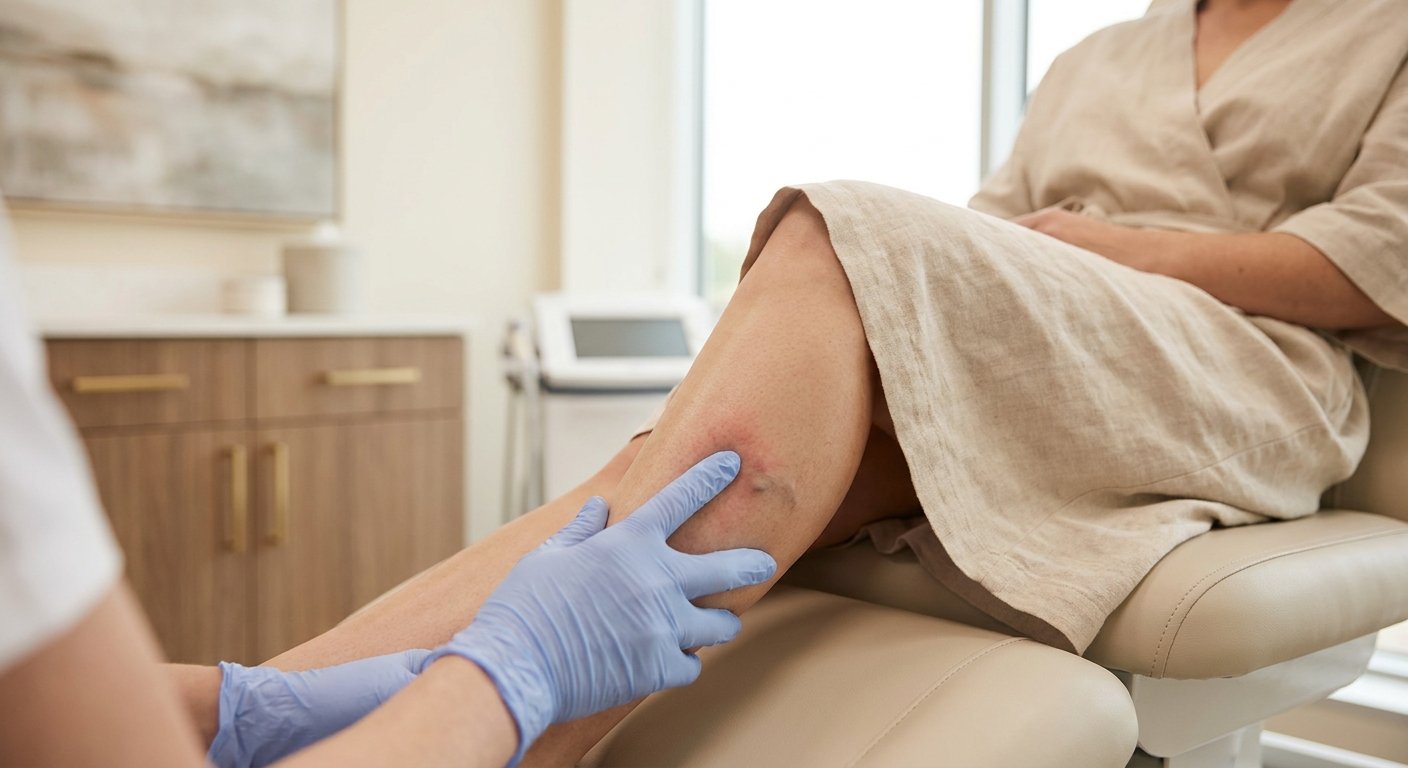
Superficial thrombophlebitis
Superficial thrombophlebitis is inflammation and a blood clot in a vein just beneath the skin, most often in the legs. At Charming Skin & Vein Clinics, we evaluate the affected vein, rule out deeper involvement, and treat the underlying cause.
Quick answer
Superficial thrombophlebitis is inflammation of a vein close to the skin’s surface caused by a small blood clot. It usually shows up as a red, warm, tender, cord-like vein — commonly in a leg affected by varicose veins. It is often manageable, but because it can sometimes extend toward the deep veins, it is worth having evaluated at Charming Skin & Vein Clinics.
What causes superficial thrombophlebitis?
The condition develops when blood flow in a surface vein slows or the vein wall is irritated, allowing a small clot to form and the vein to become inflamed. It frequently occurs in legs already affected by varicose veins. Common contributing factors include:
- Varicose veins — sluggish flow in enlarged surface veins makes clotting more likely.
- Long periods of inactivity — extended bed rest, recovery from surgery, or long travel.
- Injury or irritation to a vein — including a recent IV line or blood draw.
- Pregnancy and hormonal changes — which affect circulation and clotting.
- Being overweight or smoking — both add strain to the venous system.
- Inherited clotting tendencies — some people are simply more prone to clots.
Symptoms of superficial thrombophlebitis
Symptoms usually appear along the path of the affected surface vein and can include:
- Redness and warmth in the skin over the vein.
- A firm, cord-like vein you can feel just beneath the skin.
- Tenderness or pain along the vein, often worse when the area is pressed.
- Localized swelling around the affected vein.
- Itching or a hardened feeling in the skin over the vein.
Superficial thrombophlebitis is usually less serious than a deep vein clot, but if redness or pain spreads, or the whole limb becomes swollen, it should be evaluated promptly to make sure the deep veins are not involved.
How we evaluate and treat it
Because superficial thrombophlebitis is often a sign of underlying venous reflux and can occasionally extend toward the deep veins, we start by understanding what is happening beneath the skin before discussing treatment. Dr. Abboud brings more than 20 years of experience caring for veins, and care begins with a clear diagnosis and a plan matched to your symptoms.
- Ultrasound vein diagnosis to confirm the clot, check that the deep veins are clear, and map underlying reflux
- Varicose vein treatment for the enlarged veins that often set the stage for a clot
- Endovenous laser treatment (EVLA) to close a weakened underlying vein and redirect flow to healthier veins
- Compression therapy to support the vein and ease pain and swelling day to day
Related vein conditions
- Vein symptoms & conditions — the full overview of how venous problems show up
- Varicose veins
- Reticular veins
- Leg pain from veins
Common questions
When should I see a vein doctor about superficial thrombophlebitis?
It is worth scheduling an evaluation if you notice a red, warm, tender vein you can feel under the skin, especially in a leg with varicose veins. Seek prompt care if the redness or pain spreads, the whole limb swells, or you develop shortness of breath — these can signal that the deep veins are involved. An ultrasound can show exactly what is happening.
Is treatment covered by insurance?
Most PPO plans and Medicare cover treatment for symptomatic veins. Purely cosmetic vein work is self-pay. We are glad to review your symptoms and help you understand your coverage before any treatment.
What can I expect at a free vein screening?
Your screening is a relaxed, informational visit. We listen to your symptoms, look at your legs, and talk through whether an ultrasound and further evaluation make sense. There is no pressure — the goal is to help you understand your veins and your options.
Ready to take the next step? Book a Free Vein Screening or call us at 630-974-1400.
Medically informed care
Vein care at Charming Skin & Vein Clinics is led by Dr. Abboud, who brings more than 20 years of medical experience — a graduate of the University of Damascus with residency training at Cook County Hospital and John H. Stroger Jr. Hospital in Chicago. This page is for general education, reviewed for accuracy, and is not a substitute for an in-person evaluation.
Because superficial thrombophlebitis often develops alongside varicose veins and underlying venous reflux, we may recommend varicose vein treatment or an ultrasound vein diagnosis to map the source before planning care. Most PPO plans and Medicare cover treatment for symptomatic veins. Book a Free Vein Screening or call 630-974-1400.
Trusted resources: MedlinePlus — Superficial thrombophlebitis, MedlinePlus — Venous insufficiency.