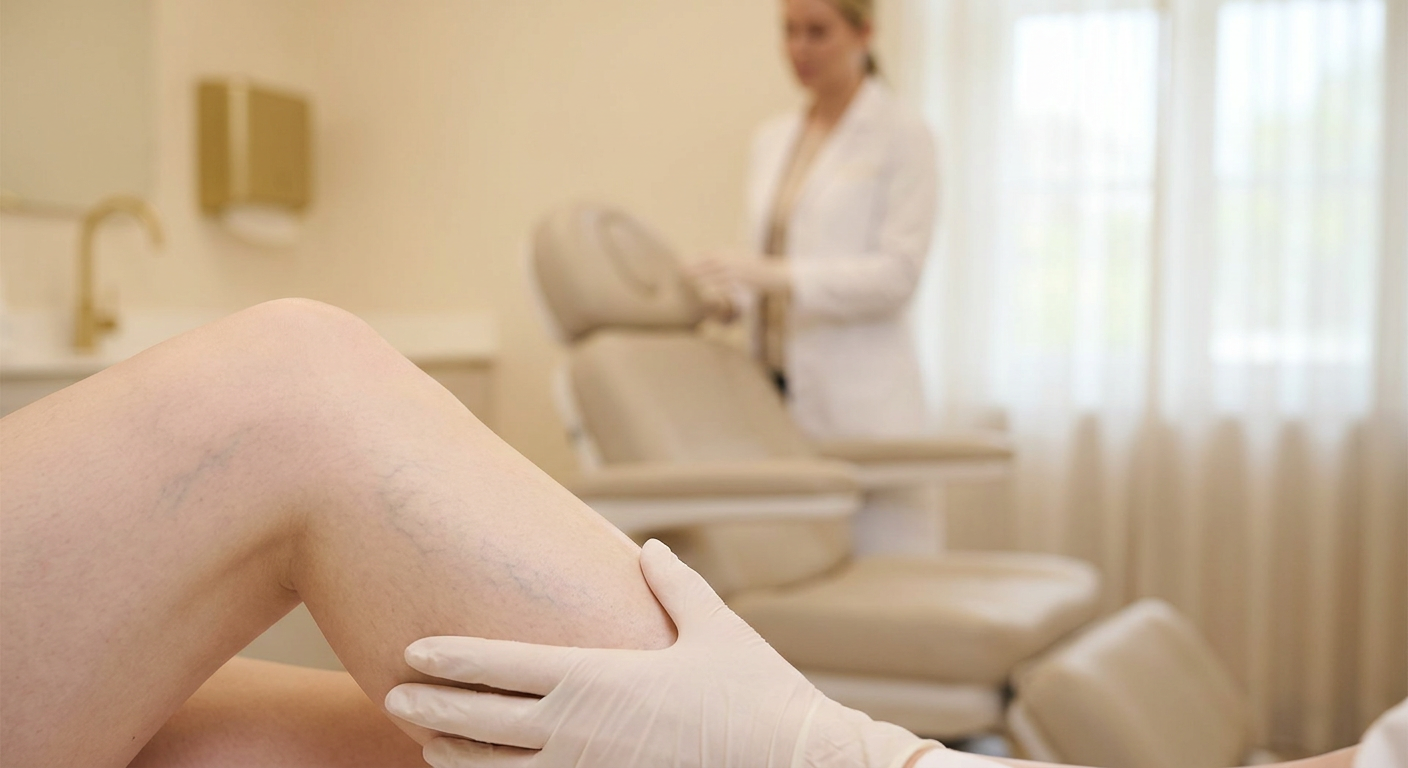
What are reticular veins?
Reticular veins are small blue or green veins, usually 1–3 mm wide, that sit just beneath the skin — most often behind the knees, on the thighs, or around the ankles. They frequently feed nearby spider veins and can be a sign of underlying venous reflux.
Quick answer
Reticular veins are small bluish or greenish veins, usually 1–3 mm wide, that sit just beneath the skin and often feed nearby spider veins. They are frequently linked to underlying venous insufficiency and can be evaluated and treated at Charming Skin & Vein Clinics.
What causes reticular veins?
Reticular veins develop when the small veins under the skin become dilated, often because the tiny valves inside them are no longer directing blood efficiently back toward the heart. Several factors can contribute:
- Genetics — a family history of vein problems raises your likelihood of developing reticular and spider veins.
- Hormonal changes — pregnancy, and hormonal shifts more generally, can dilate veins near the skin.
- Prolonged standing or sitting — long hours on your feet or at a desk add pressure to the leg veins.
- Aging — vein walls and valves naturally lose some elasticity over time.
- Underlying venous reflux — reticular veins often sit above a larger vein that is not draining properly.
Symptoms of reticular veins
Many reticular veins are mainly a cosmetic concern, but some people notice symptoms, especially when the veins are linked to underlying reflux:
- Visible blue or green web-like veins, often behind the knee or on the thigh
- Clusters of nearby spider veins that the reticular vein appears to feed
- Aching, throbbing, or a feeling of heaviness in the legs
- Mild swelling or restlessness in the legs after long periods of standing
Treatment options for reticular veins
At Charming Skin & Vein Clinics, care begins with understanding what is happening beneath the skin so treatment addresses the source, not just the surface veins.
- Sclerotherapy — a solution is injected into the vein, causing it to close and fade as blood reroutes to healthier veins.
- Spider vein treatment — often paired with reticular vein care, since reticular veins frequently feed surface spider veins.
- Compression therapy — supports circulation and can ease symptoms day to day.
- Lifestyle measures — regular movement, leg elevation, and weight management help reduce pressure on the leg veins.
How we evaluate and treat it
Because reticular veins often overlie underlying venous reflux, we start by understanding the source before discussing treatment. Dr. Abboud brings more than 20 years of experience caring for veins, and care begins with a clear diagnosis and a plan matched to your symptoms.
- Ultrasound vein diagnosis to map blood flow and pinpoint where valves are not working as they should
- Spider vein treatment for the surface vessels that reticular veins often feed
- Sclerotherapy to close and fade reticular veins
- Compression therapy to support circulation and ease symptoms
Related vein conditions
- Vein symptoms & conditions — the full overview of how venous problems show up
- Spider veins
- Varicose veins
- Leg pain from veins
Medically informed care
Vein care at Charming Skin & Vein Clinics is led by Dr. Abboud, who brings more than 20 years of medical experience — a graduate of the University of Damascus with residency training at Cook County Hospital and John H. Stroger Jr. Hospital in Chicago. This page is for general education, reviewed for accuracy, and is not a substitute for an in-person evaluation.
Because reticular veins often appear alongside surface vessels and underlying venous reflux, we may recommend spider vein treatment or an ultrasound vein diagnosis to map the source before planning care. Most PPO plans and Medicare cover treatment for symptomatic veins. Book a Free Vein Screening or call 630-974-1400.
Trusted resources: MedlinePlus — Varicose veins, MedlinePlus — Venous insufficiency.
Common questions
When should I see a vein doctor about reticular veins?
It is worth scheduling an evaluation if reticular veins are spreading, feeding clusters of spider veins, or accompanied by aching, heaviness, or swelling in the legs. These can be signs of underlying venous reflux, and an ultrasound can show what is happening beneath the skin.
Is treatment covered by insurance?
Most PPO plans and Medicare cover treatment for symptomatic veins. Purely cosmetic vein work is self-pay. We are glad to review your symptoms and help you understand your coverage before any treatment.
What can I expect at a free vein screening?
Your screening is a relaxed, informational visit. We listen to your symptoms, look at your legs, and talk through whether an ultrasound and further evaluation make sense. There is no pressure — the goal is to help you understand your veins and your options.
Ready to take the next step? Book a Free Vein Screening or call us at 630-974-1400.