Understanding May-Thurner syndrome
May-Thurner syndrome is a vein condition in which the right iliac artery presses on the left iliac vein deep in the pelvis, slowing blood flow out of the left leg. It can lead to leg swelling, discomfort and a higher risk of blood clots.
Quick answer
May-Thurner syndrome happens when the right iliac artery compresses the left iliac vein against the spine, reducing outflow from the left leg. This can cause left-sided leg swelling, heaviness, varicose veins and an increased risk of deep vein thrombosis. A vein evaluation helps identify whether this compression is contributing to your symptoms so care can be directed appropriately.
What causes May-Thurner syndrome?
May-Thurner syndrome is an anatomical condition. Where the right iliac artery crosses over the left iliac vein in the pelvis, the pulsing artery can press the vein against the spine. Over time this pressure narrows the vein and can irritate its inner lining, making it harder for blood to return from the left leg. Factors that can make symptoms more noticeable include:
- Natural anatomy, since the crossing point of the artery and vein varies from person to person
- Being female, as the condition is most often recognized in women between roughly 20 and 50 years of age
- Long periods of sitting or standing that slow blood flow in the legs
- Pregnancy or recent childbirth, which increase pressure on the pelvic veins
Symptoms of May-Thurner syndrome
Many people with the anatomy of May-Thurner syndrome never develop symptoms. When symptoms do appear, they usually affect the left leg and may include:
- Swelling of the left leg, often more pronounced than the right
- A feeling of heaviness, aching or fatigue in the leg
- Varicose veins or other visible surface veins
- Skin changes or discoloration around the lower leg and ankle
- Tenderness, warmth or sudden swelling, which can signal a blood clot and needs prompt medical attention
Why May-Thurner syndrome matters
Because May-Thurner syndrome slows blood flow out of the leg, it can raise the risk of deep vein thrombosis (DVT), a blood clot in the deep veins. Left unaddressed, reduced venous outflow can also contribute to ongoing swelling, varicose veins and skin changes. Recognizing the pattern early allows the underlying cause to be evaluated and the right care to be planned. If you have sudden leg swelling, pain or warmth, seek medical care promptly.
How we evaluate and treat it
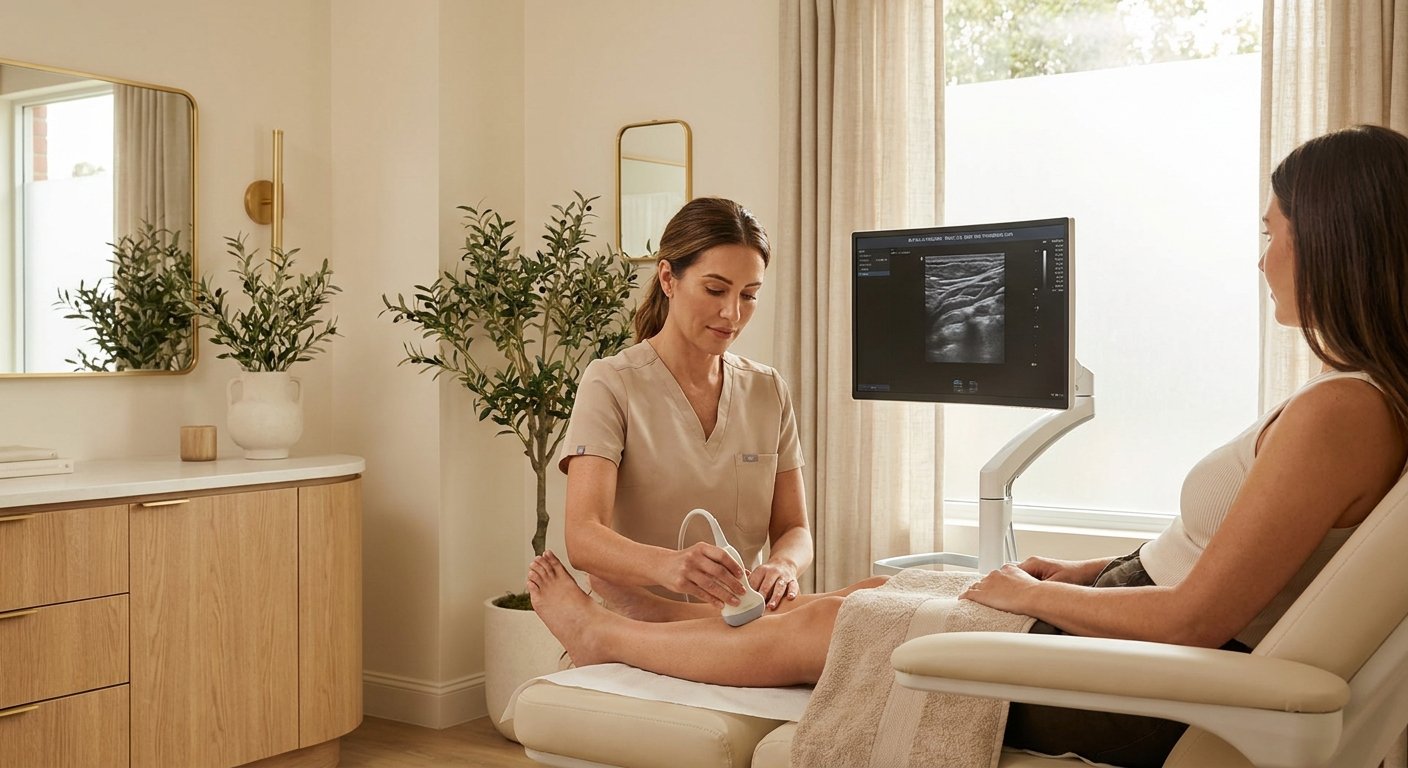
When left-leg swelling or heaviness points toward a venous problem, we start by understanding what is happening in the veins themselves. Using ultrasound vein diagnosis, we map blood flow and check for underlying venous reflux that can worsen leg swelling, skin changes and discomfort. From there, Dr. Abboud draws on more than 20 years of experience to recommend supportive, conservative care first and to coordinate with other specialists when deeper imaging or advanced treatment of the iliac vein is needed. Common supportive approaches include:
- Ultrasound vein diagnosis to map the veins and check for reflux
- Compression therapy to support circulation and reduce swelling
- Varicose vein treatment when diseased surface veins are contributing to symptoms
- Spider vein treatment for smaller surface veins linked to skin irritation
Related vein conditions
- Vein symptoms & conditions — a guide to common leg-vein problems
- Venous stasis dermatitis (rash from veins)
- Skin ulcers related to veins
- Vein wall weakness
Common questions
When should I see a vein doctor about this?
If you notice persistent swelling in one leg, heaviness, aching, visible veins or skin changes that do not improve, it is worth having your veins evaluated. A vein assessment can show whether an underlying venous problem, including compression like May-Thurner syndrome, is contributing to your symptoms so the right care can be planned. Sudden swelling, pain or warmth should be checked promptly, as it can signal a blood clot.
Is treatment covered by insurance?
Most PPO plans and Medicare cover treatment for symptomatic veins. When leg symptoms point to an underlying venous condition, the evaluation and medically necessary treatment are often covered. Purely cosmetic vein work is self-pay. Our team can help you understand your coverage before any treatment is scheduled.
What can I expect at a free screening?
At your free vein screening, we review your symptoms and history and take a focused look at your legs. If appropriate, we use ultrasound to check how your veins are working. You will leave with a clear explanation of what we find and an unhurried discussion of your options. There is no pressure and no obligation.
Medically informed care
Vein care at Charming Skin & Vein Clinics is led by Dr. Abboud, who brings more than 20 years of medical experience — a graduate of the University of Damascus with residency training at Cook County Hospital and John H. Stroger Jr. Hospital in Chicago. This page is for general education, reviewed for accuracy, and is not a substitute for an in-person evaluation.
If you are noticing leg symptoms, our team can help sort out the cause through a careful ultrasound vein diagnosis and review related vein symptoms and conditions. Most PPO plans and Medicare cover treatment for symptomatic veins.
Trusted resources: MedlinePlus — Venous insufficiency, Society for Vascular Surgery — Patient resources.
Book a Free Vein Screening or call 630-974-1400 to speak with our team. We see patients in Chicago, Oak Brook and Orland Park.