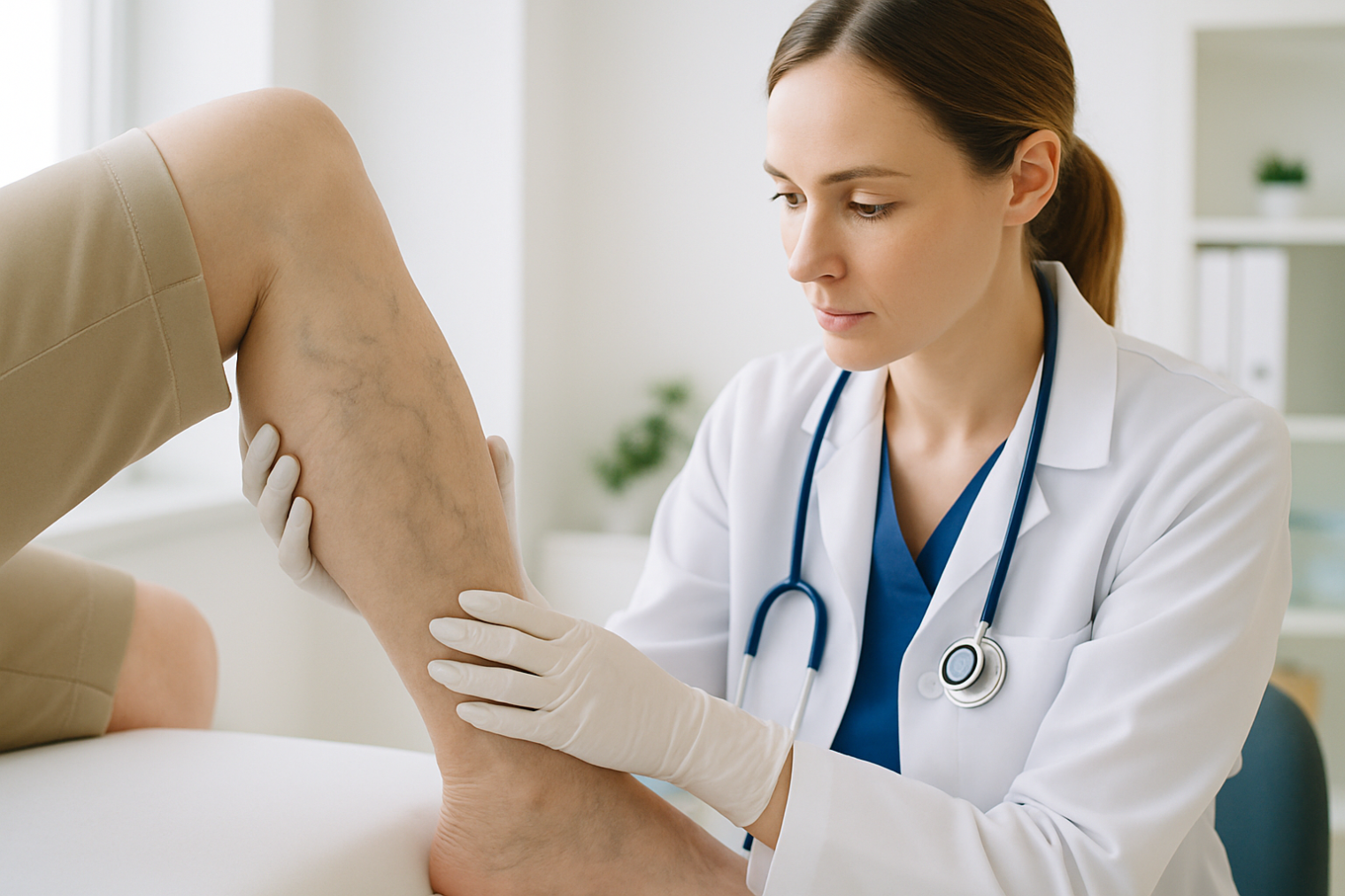
Choosing the best treatment for Varicose Veins, Spider Veins, Varicose Veins Doctor, and Veins Specialist depends on the severity of the condition, symptoms, underlying vein problems, and individual goals. Some visible veins are mainly cosmetic, while others can cause aching, swelling, heaviness, itching, or skin changes. Modern vein treatment includes conservative care, sclerotherapy, laser treatment, radiofrequency ablation, and minimally invasive procedures. A professional evaluation can identify the cause of the vein problem and help determine which treatment is most appropriate.
What Causes Varicose Veins?
Varicose veins develop when valves inside the veins become weak or damaged. These valves normally help blood travel toward the heart. When they do not work properly, blood can flow backward and collect in the veins, causing them to enlarge and become twisted or bulging.
Age, genetics, pregnancy, prolonged standing, prolonged sitting, excess weight, and limited physical activity can increase the likelihood of developing varicose veins. Symptoms may include aching, heaviness, swelling, itching, burning, or leg cramps.
Not every visible vein requires medical treatment. However, painful or progressively worsening veins should be evaluated. A Veins Specialist can examine the affected area and determine whether abnormal blood flow is contributing to the problem.
When Should You See a Varicose Veins Doctor?
You should consider seeing a Varicose Veins Doctor if visible veins are accompanied by persistent pain, swelling, heaviness, itching, skin discoloration, or discomfort that affects your daily activities.
An evaluation is especially important if your veins are becoming more prominent or your symptoms continue despite lifestyle changes. Your provider may perform a physical examination and recommend a duplex ultrasound to evaluate blood flow and identify abnormal reflux.
Skin changes, inflammation, ulcers, or bleeding from a varicose vein should receive prompt medical attention. Getting evaluated does not necessarily mean you will need a procedure. A specialist can explain whether conservative care is sufficient or whether treatment may provide better results.

Can Compression Therapy Help?
Compression stockings are commonly used to help manage symptoms associated with varicose veins. They apply pressure to the legs, which can support circulation and reduce blood pooling. They may help people experiencing swelling, aching, or heaviness.
Compression therapy does not eliminate existing varicose veins. Instead, it can help control symptoms and may be recommended as part of conservative management.
Regular walking, avoiding prolonged sitting or standing, and elevating the legs while resting can also support circulation. Maintaining a healthy weight and staying physically active may further benefit overall vein health.
If symptoms continue despite these measures, a Veins Specialist can evaluate whether another treatment is appropriate. The best option depends on the underlying vein problem and the individual’s health and treatment goals.
Is Sclerotherapy Effective?
Sclerotherapy is a common treatment for certain varicose veins and Spider Veins. During the procedure, a solution is injected into the targeted vein. The treatment causes the vein to close, allowing the body to gradually absorb it.
Sclerotherapy can be performed in an office setting and generally does not require major surgery. The number of treatments needed depends on the size, number, and location of the veins.
Ultrasound-guided foam sclerotherapy may be used for certain larger veins. Ultrasound helps the provider identify and treat the affected vessel more precisely.
Sclerotherapy can be an effective option for appropriately selected patients, but it is not ideal for every vein problem. A professional examination can determine whether sclerotherapy is suitable or whether the underlying source of abnormal blood flow needs to be treated first.
How Do Laser and Radiofrequency Treatments Work?
Endovenous laser treatment and radiofrequency ablation are minimally invasive procedures used to treat certain larger veins with abnormal blood flow. A thin catheter delivers energy inside the affected vein, causing it to close.
Once the problematic vein is closed, blood can redirect through healthier veins. These procedures are generally performed without traditional vein-stripping surgery and may allow patients to return to normal activities relatively quickly.
The choice between laser and radiofrequency treatment depends on the vein’s location, size, anatomy, and the patient’s individual circumstances. A Varicose Veins Doctor can use an ultrasound examination to determine whether one of these procedures is appropriate.
These treatments are generally considered when an underlying vein problem contributes to symptomatic varicose veins. Treating the source can provide a more comprehensive approach than treating only the visible surface veins.
When Is Phlebectomy Needed?
Some large or twisted varicose veins may be treated with ambulatory phlebectomy. During this minimally invasive procedure, the targeted veins are removed through very small openings in the skin.
Phlebectomy is generally performed as an outpatient treatment and may be appropriate for veins that are too large or prominent for certain other techniques. The procedure is different from traditional vein-stripping surgery and typically involves much smaller skin openings.
The appropriate treatment depends on the patient’s vein anatomy and overall condition. A Veins Specialist can determine whether phlebectomy, ablation, sclerotherapy, or another option is most suitable.
Traditional surgery may still be considered in certain situations, but many patients can be treated using less invasive approaches. A thorough evaluation helps ensure that treatment is selected based on medical need rather than appearance alone.

What Is the Best Treatment for Spider Veins?
Spider veins are small red, blue, or purple blood vessels that often appear in web-like patterns on the legs. Unlike larger varicose veins, they are frequently treated for cosmetic reasons, although some people may experience discomfort.
Sclerotherapy is commonly used to treat spider veins because it allows individual vessels to be targeted. Depending on the size, location, and appearance of the veins, other treatments may sometimes be considered.
Treating spider veins does not guarantee that new ones will not develop. Factors such as genetics, age, hormones, and circulation can contribute to the appearance of additional veins.
If spider veins occur alongside larger varicose veins or significant symptoms, an evaluation can determine whether there is an underlying vein problem. Treating that underlying issue may be an important part of achieving better long-term results.
How Do You Choose the Right Treatment?
There is no single treatment that works best for everyone. The appropriate option depends on the type and severity of the vein condition, symptoms, anatomy, overall health, and personal goals.
A duplex ultrasound may be used to evaluate blood flow and identify abnormal reflux. Based on the findings, treatment may range from compression therapy and lifestyle changes to sclerotherapy, ablation, phlebectomy, or surgery.
Choosing an experienced provider is also important. A qualified specialist should be able to explain available options, expected results, potential risks, recovery time, and whether additional treatments may be necessary.
Rather than choosing a treatment based only on how a vein looks, consider getting a professional evaluation. This allows your provider to address both the visible veins and any underlying circulation concerns.
How Can You Support Healthy Veins?
Healthy lifestyle habits can complement professional vein treatment. Walking and other regular physical activities encourage the calf muscles to assist blood circulation through the legs.
Avoiding long periods of sitting or standing can also help. If your routine requires you to remain in one position for extended periods, taking regular movement breaks may support circulation. Elevating your legs while resting can help reduce swelling for some people.
Maintaining a healthy weight may also reduce pressure on the veins. However, lifestyle changes cannot correct every underlying vein problem.
If you develop persistent pain, swelling, skin changes, or increasingly prominent veins, consider scheduling an evaluation. Early assessment can help identify the cause and determine whether treatment is appropriate.
Conclusion
The best treatment for Varicose Veins depends on the underlying cause, severity, symptoms, and individual goals. Options may include compression therapy and lifestyle changes, as well as sclerotherapy, laser treatment, radiofrequency ablation, phlebectomy, or surgery when appropriate. Modern vein care often focuses on minimally invasive treatments that address problematic veins while supporting healthy circulation.
If you are concerned about Spider Veins or symptomatic varicose veins, a professional evaluation can help determine the right approach. Charming Skin Vein Clinics provides vein care in Oak Brook and can help you understand your treatment options. Call 630-974-2400 to learn more or schedule an evaluation.