
Varicose Veins develop when one-way valves in the legs stop directing blood upward efficiently, allowing pressure to build in surface vessels. The result may be a rope-like, blue, or twisted vessel, but appearance is only one part of the story. Some people have little discomfort, while others notice heaviness, aching, swelling, itching, cramps, or skin changes that worsen as the day continues. Understanding the difference between appearance and symptoms helps patients know when simple home measures may be reasonable and when a medical evaluation is more appropriate. This guide reviews causes, examination steps, treatment considerations, realistic expectations, and warning signs connected to the topic. It is educational only and does not assume that every visible vessel requires a procedure. The goal is to support informed questions without creating unnecessary alarm or false reassurance.
How Varicose Veins Develop
The central question is not only what can be seen through the skin, but whether the affected vessels are producing symptoms or reflecting backward blood flow. A careful plan begins with the patient’s goals and health history, then uses examination and imaging only when they add useful information. That approach helps avoid both undertreatment of meaningful symptoms and unnecessary procedures for findings that can be safely observed. It also creates a useful baseline for follow-up when symptoms change or prior treatment has already been attempted.
How Blood Moves Through the Leg Veins
Leg veins must move blood upward against gravity, so they rely on one-way valves and the squeezing action of nearby muscles. When those valves become weak or the vessel wall stretches, blood may move backward and collect, increasing pressure in surface vessels.
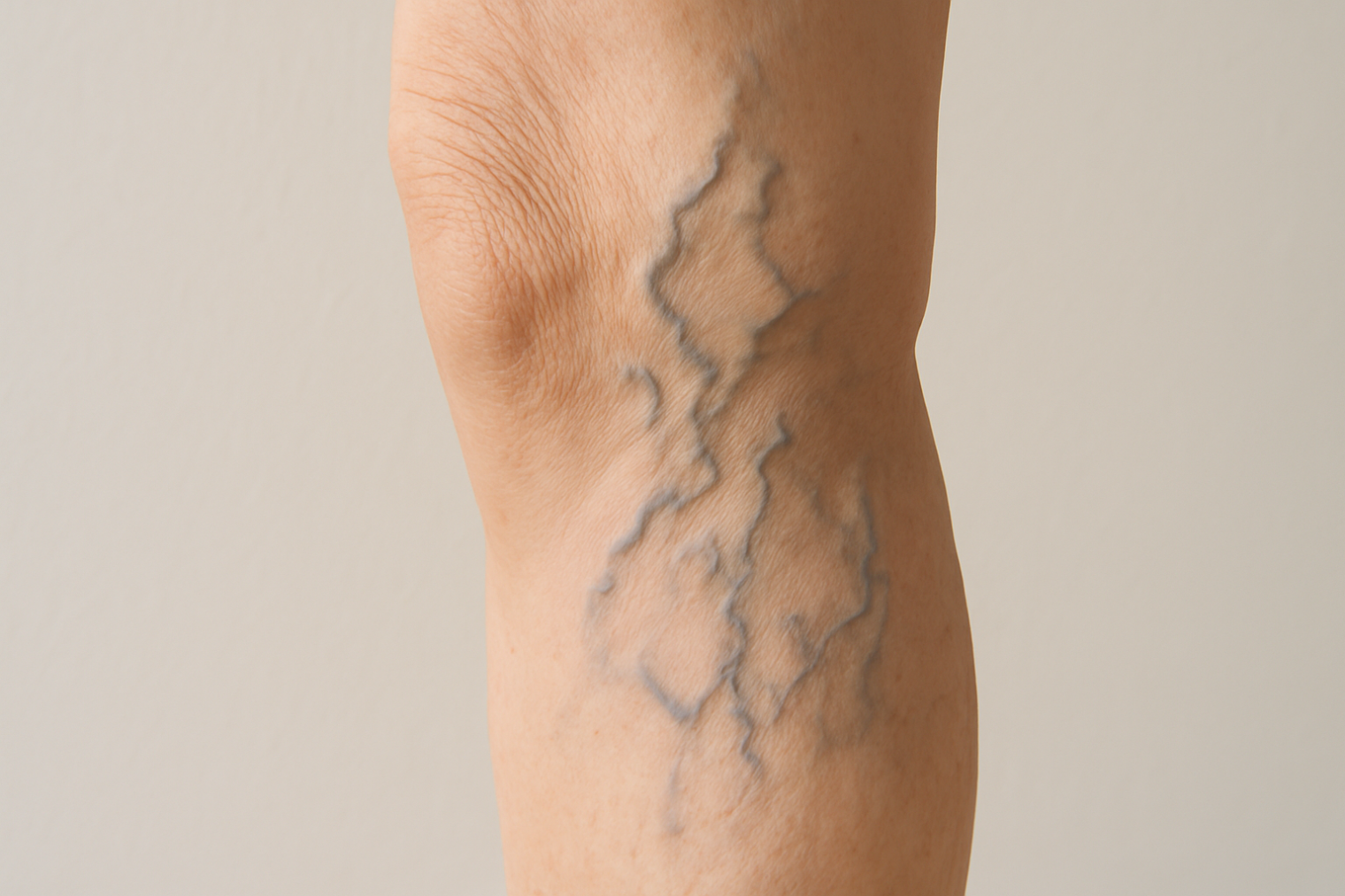
That pressure can make a vein widen, twist, or become easier to see through the skin. The appearance may be the first sign, but some people also notice heaviness, aching, itching, warmth, or swelling after long periods of sitting or standing.
Who Is More Likely to Develop Vein Problems
Age, family history, pregnancy, excess body weight, and long periods of limited movement can increase the likelihood of weak vein valves. Work that involves many hours at a desk or on the feet may also make symptoms more noticeable because the calf muscles are not regularly helping blood move upward.
Risk does not equal certainty, and people without obvious risk factors can still develop visible vessels. A personal evaluation matters because leg swelling, pain, or skin changes may have causes unrelated to superficial venous disease.
Common Symptoms Beyond Appearance
Symptoms vary widely. Some people are mainly concerned about appearance, while others describe throbbing, burning, restless sensations, nighttime cramps, fatigue, or a heavy feeling that builds through the day.
A useful clue is whether discomfort becomes worse after prolonged standing and improves with walking, elevation, or rest. Keeping a brief symptom log can help a clinician understand timing, triggers, and whether one leg is consistently more affected than the other.
Warning Signs That Need Prompt Attention
Visible vessels are not always an emergency, yet certain changes deserve prompt medical attention. A rapidly worsening area, a new sore near the ankle, skin that becomes dark or hardened, or persistent swelling can signal that venous pressure is affecting nearby tissue.
Bleeding from an enlarged surface vessel should be treated as urgent, and sudden one-sided swelling with tenderness requires timely evaluation for a possible blood clot. Shortness of breath or chest pain is an emergency because those symptoms can be associated with a clot that has traveled to the lungs.
What the Physical Examination Can Show
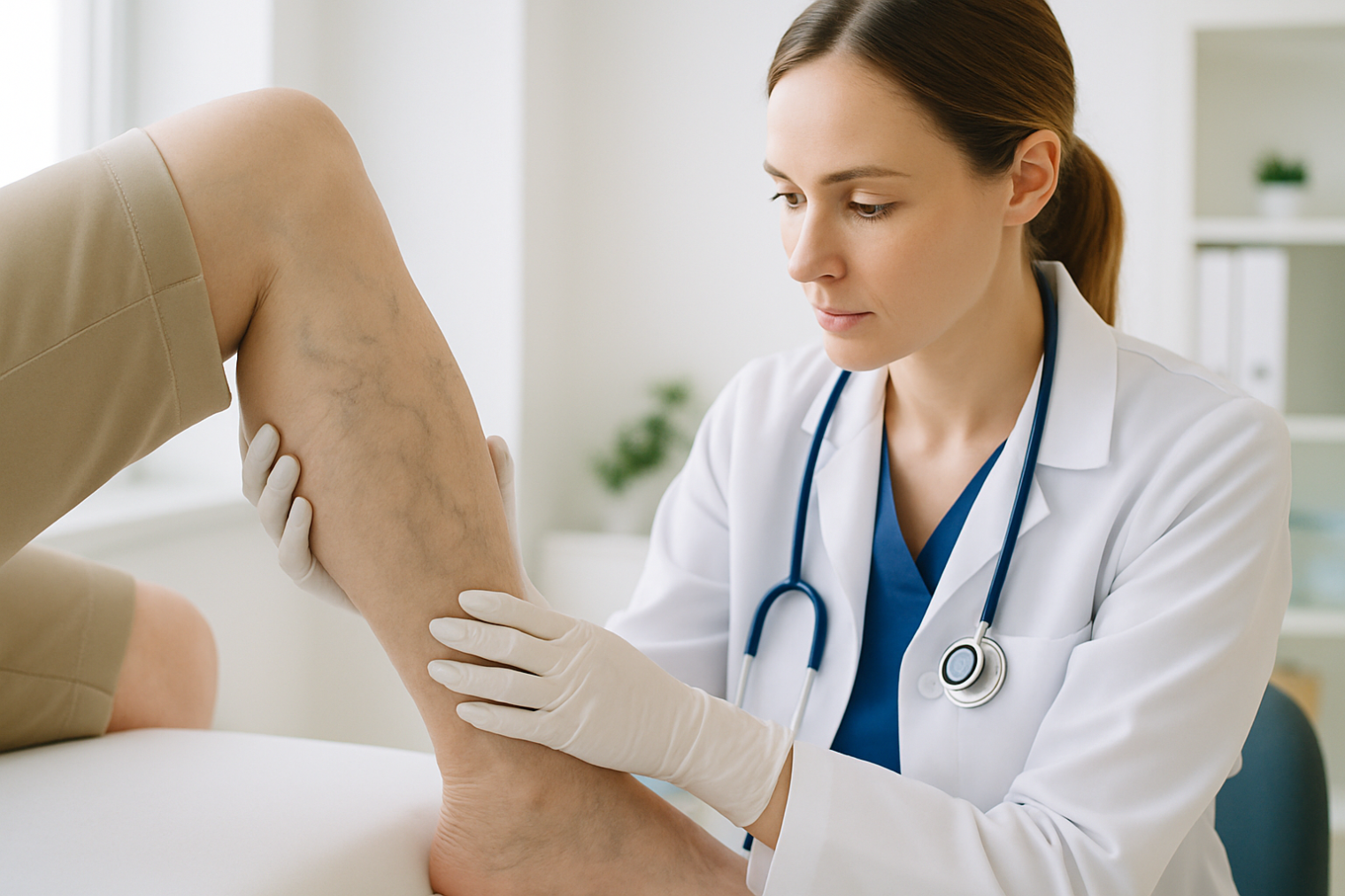
A focused examination usually begins with questions about symptoms, family history, past pregnancies, prior clots, medications, previous procedures, and daily activity. The clinician may inspect the legs while the patient is standing because gravity can make abnormal surface vessels easier to identify.
A clinician assessing Varicose Veins combines what is visible with the patient’s symptoms, history, and circulation findings rather than judging the condition from appearance alone.
The exam may also include checking pulses, swelling, skin temperature, color changes, tenderness, and any open areas. These details help separate a cosmetic concern from a circulation problem that may need imaging or a broader medical workup.
When Duplex Ultrasound May Be Recommended
Duplex ultrasound is commonly used when symptoms or the physical examination suggest valve problems in deeper or larger veins. The test uses sound waves to show blood flow and can reveal reflux, obstruction, or a clot without exposing the patient to radiation.
Results help the clinician map which vessel is involved and decide whether conservative care, an office-based procedure, or referral for additional evaluation is appropriate. Imaging is not necessary for every fine surface vessel, so the decision depends on symptoms and examination findings.
Conservative Steps That May Ease Symptoms
Conservative steps may reduce discomfort even though they do not remove every visible vessel. Walking, changing position regularly, elevating the legs, maintaining a healthy weight, and avoiding long stretches of immobility can support the calf-muscle pump and lower pressure in the legs.
These habits work best when they fit the person’s health status and daily routine. Someone with heart, artery, nerve, or mobility problems should ask a qualified clinician before making major exercise or compression changes.
How to Evaluate a Vein-Care Provider
A strong vein-care consultation should include a clear diagnosis, an explanation of whether imaging is needed, and a discussion of alternatives. Patients can ask who will perform the procedure, what training that person has, how ultrasound is used, and how complications are handled.
Be cautious when every patient is offered the same treatment or when benefits are guaranteed. A trustworthy plan should reflect the person’s symptoms, anatomy, medical history, goals, and tolerance for recovery rather than a one-size-fits-all package.
Conclusion
Varicose Veins Persistent pain, swelling, skin discoloration, sores, or bleeding should not be ignored. A professional assessment can clarify whether the concern is limited to surface appearance or reflects valve dysfunction that may benefit from imaging and treatment. In Oak Brook, Charming Skin Vein Clinics (Oakbrook) can be contacted at 630-974-2400 to discuss an evaluation and learn which options may fit the patient’s symptoms, medical history, and goals. Results, recovery, and insurance decisions vary, and no procedure should be guaranteed before an examination. Patients should ask for a clear diagnosis, alternatives, possible complications, aftercare instructions, and expected follow-up. Follow written aftercare instructions and keep any recommended follow-up appointments. Active bleeding, sudden one-sided swelling, chest pain, or shortness of breath requires urgent or emergency medical attention rather than a routine appointment.
Medical information note: This educational article was reviewed against patient resources from the National Heart, Lung, and Blood Institute, MedlinePlus, and the Society for Vascular Surgery. It does not provide a diagnosis or replace individualized medical advice.
https://www.spreaker.com/episode/what-causes-varicose-veins-and-when-should-you-worry–74717534
https://www.podomatic.com/podcasts/kateellis199472podcast/episodes/2026-08-27T06_35_37-07_00
https://stream.redcircle.com/episodes/59dd615f-e1db-42b1-a9c3-b1765e98764b/stream.mp3