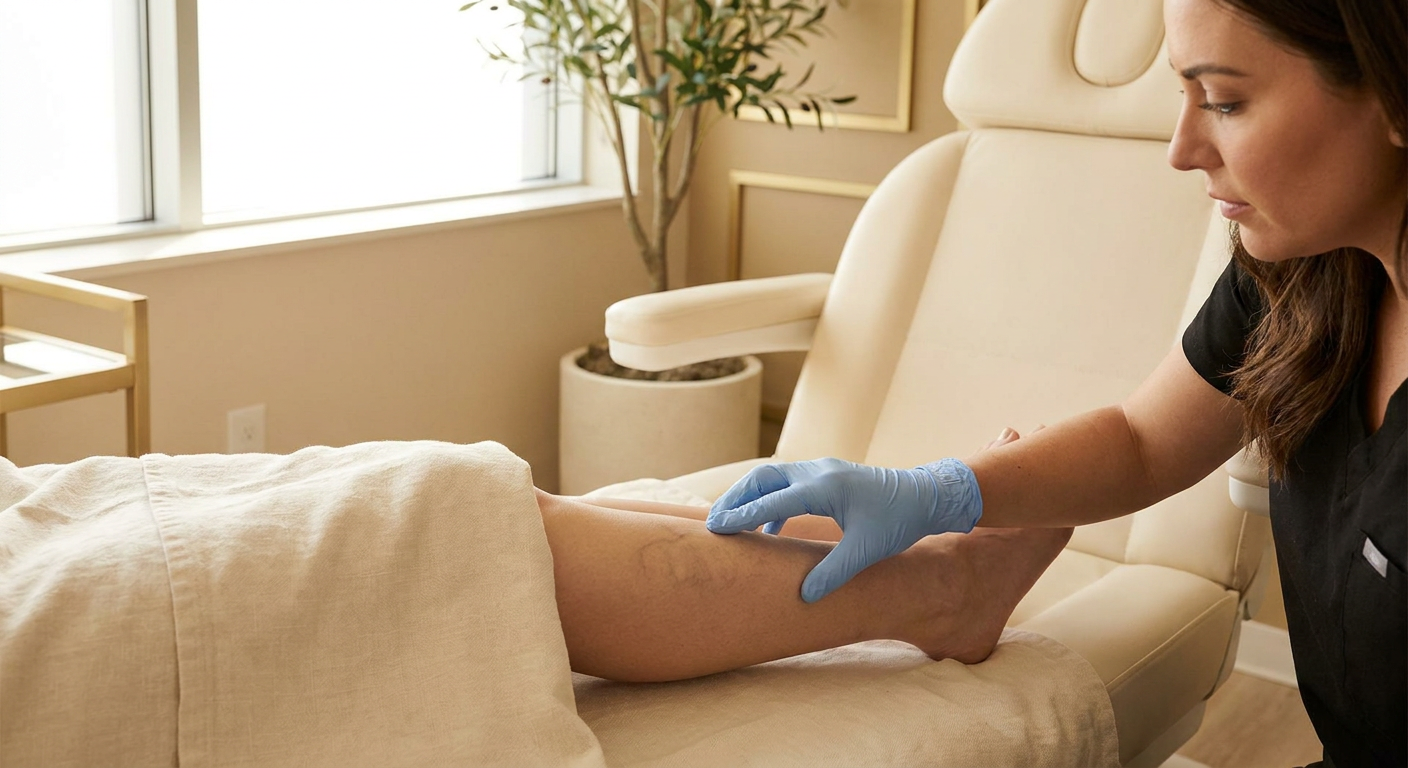
Arteriovenous communication
Arteriovenous communication (AVC), also called an arteriovenous fistula, is an abnormal connection between an artery and a vein that lets blood bypass the capillaries and flow directly from the artery into the vein. Over time this can strain nearby veins and contribute to swelling, varicose veins, and circulation problems.
Quick answer
Arteriovenous communication is an abnormal connection between an artery and a vein that lets blood bypass the capillaries, which can strain the veins and contribute to swelling, varicose veins, and circulation problems. It can be congenital or follow trauma or surgery, and is evaluated with ultrasound to guide a treatment plan.
What causes arteriovenous communication?
Arteriovenous communication can be congenital (present at birth) or acquired due to trauma, surgery, or medical procedures. Common causes include:
Congenital defect
Some people are born with abnormal connections between arteries and veins, which may not be noticed until later in life.
Trauma or injury
Injuries to the blood vessels, particularly in the arms or legs, can cause the formation of an abnormal connection between arteries and veins.
Surgical procedures
Arteriovenous fistulas may be deliberately created in patients who require hemodialysis, but unintended AVCs can also occur during surgeries.
Medical conditions
Conditions that affect blood vessel health, such as aneurysms or blood clots, can lead to AVC formation.
Symptoms of arteriovenous communication
Symptoms of arteriovenous communication vary depending on the location and severity of the abnormal connection. Common symptoms include:
- Swelling — persistent swelling, particularly in the arms or legs, due to abnormal blood flow.
- Visible veins — enlarged or bulging veins near the surface of the skin, often resembling varicose veins.
- Pulsating sensation — a feeling of pulsing or throbbing in the affected area due to increased blood flow through the abnormal connection.
- Fatigue or weakness — tiredness or weakness in the affected limb due to impaired circulation.
- Skin discoloration — the skin near the abnormal vein may appear reddish or bluish due to changes in blood flow.
In severe cases, AVC can place extra strain on the heart, so timely evaluation matters.
Why treat arteriovenous communication?
Arteriovenous communication can lead to long-term complications if left untreated, including varicose veins, chronic venous insufficiency, and added strain on circulation. Early diagnosis and treatment help restore normal blood flow and prevent complications, and timely intervention can reduce the risk of more serious problems and improve quality of life.
Treatment options for arteriovenous communication
At Charming Skin & Vein Clinics, we offer a range of treatments to manage arteriovenous communication and restore proper circulation. Treatment plans are tailored based on the size, location, and severity of the condition.
Sclerotherapy
A minimally invasive procedure in which a solution is injected into the abnormal vein, causing it to close and redirect blood flow to healthier veins. Discover more about sclerotherapy.
Endovenous laser therapy (EVLT)
EVLT uses laser energy to close off the affected vein, restoring proper blood flow and relieving symptoms.
Surgical ligation
For larger or more complex arteriovenous communications, surgical ligation may be required to close off the abnormal connection and restore normal blood flow.
Embolization
This minimally invasive procedure involves placing coils or other materials into the abnormal connection to block blood flow and prevent complications.
Compression therapy
Compression stockings or wraps can help improve blood flow and reduce swelling in the affected limb. Learn more about compression therapy.
These treatments are designed to address the underlying cause of AVC, improve circulation, and prevent further complications.
Prevention and self-care tips
While some cases of arteriovenous communication cannot be prevented, managing risk factors and following self-care strategies can help reduce symptoms.
- Wear compression stockings to help improve blood flow and reduce swelling in the affected area.
- Stay active — regular physical activity, such as walking, promotes healthy circulation and reduces the risk of complications.
- Monitor symptoms and consult your healthcare provider if you notice new or worsening changes.
- Avoid trauma — protect your arms and legs from injury, particularly if you have a history of vascular issues or surgeries.
How we evaluate and treat it
Abnormal arteriovenous communications can place extra pressure on nearby veins and lead to symptoms such as swelling, aching, skin changes or visible vein clusters. We start with a careful clinical exam and imaging to map how blood is moving through the affected area before recommending any care. Dr. Abboud brings more than 20 years of experience to this evaluation, helping us understand what is contributing to your symptoms and how we can help.
- Ultrasound vein diagnosis to map blood flow and identify which veins are affected
- Varicose vein treatment for enlarged, symptomatic veins linked to the area
- Spider vein treatment for smaller surface vein clusters
- Compression therapy to support circulation and ease symptoms
Related vein conditions
- Vein symptoms & conditions — overview of the signs we evaluate
- Vein wall weakness
- Klippel-Trenaunay syndrome and veins
- Leg pain related to veins
Common questions
When should I see a vein doctor about an arteriovenous communication?
It is reasonable to be evaluated if you notice ongoing leg swelling, aching, heaviness, skin changes, or prominent veins in one area. A vein evaluation with ultrasound can clarify how blood is flowing and whether the veins involved are contributing to your symptoms.
Is treatment covered by insurance?
Most PPO plans and Medicare cover treatment for symptomatic veins. Cosmetic vein work is self-pay. During your visit we can review your situation and help you understand what your plan may cover.
What should I expect at a free vein screening?
A free vein screening is a relaxed, informational visit. We talk through your symptoms and history, take a look at the affected area, and explain whether further imaging or care may be helpful. There is no pressure and no obligation.
Medically informed care
Vein care at Charming Skin & Vein Clinics is led by Dr. Abboud, who brings more than 20 years of medical experience — a graduate of the University of Damascus with residency training at Cook County Hospital and John H. Stroger Jr. Hospital in Chicago. This page is for general education, reviewed for accuracy, and is not a substitute for an in-person evaluation.
If you are noticing vein changes or swelling, an ultrasound vein diagnosis can map the affected vessels, and many related concerns are covered on our vein symptoms and conditions guide. Most PPO plans and Medicare cover treatment for symptomatic veins. To get started, Book a Free Vein Screening or call 630-974-1400.
Trusted resources: MedlinePlus — Venous insufficiency, NIH NHLBI — Varicose Veins.
Ready to take the next step? Book a Free Vein Screening or call us at 630-974-1400.