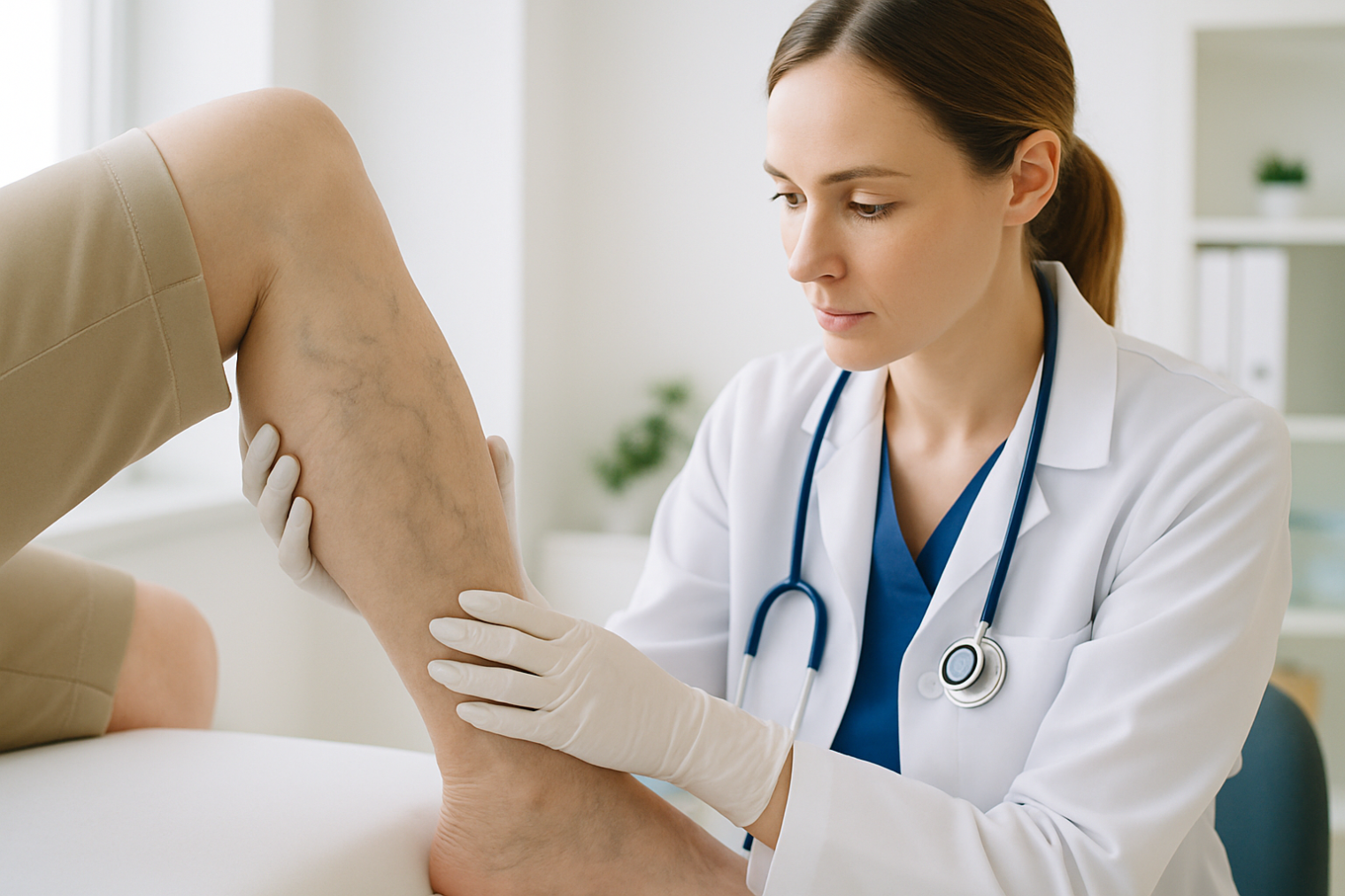
Varicose Veins can be more than a cosmetic concern. Enlarged, twisted veins may cause aching, heaviness, swelling, itching, or discomfort, especially after standing for long periods. Spider veins are usually smaller and closer to the skin’s surface, but they can sometimes appear alongside other vein problems. Knowing when to consult a Varicose Veins Doctor or Veins Specialist can help you understand whether treatment is appropriate.
A vein specialist can evaluate your symptoms, examine your circulation, and determine whether an underlying vein condition is contributing to your concerns. Getting professional advice can help you understand your options and address symptoms before they interfere with daily activities.
What Does a Vein Specialist Treat?
A vein specialist focuses on conditions affecting the veins and circulation. Common concerns include varicose veins, spider veins, leg swelling, and chronic venous insufficiency.
Varicose veins can develop when valves inside the veins do not work properly. Blood may collect in the veins, causing them to become enlarged, twisted, or more noticeable beneath the skin.
During an evaluation, a specialist considers your symptoms, medical history, family history, and the appearance of your veins. An ultrasound may also be used to assess blood flow and identify problems that cannot be seen from the outside.
This evaluation helps determine whether your veins are primarily a cosmetic concern or whether an underlying circulation problem should be addressed.
When Should I See a Vein Specialist?
Not everyone with visible veins needs treatment. However, you should consider an evaluation if you experience persistent aching, heaviness, swelling, itching, burning, or discomfort in your legs.
Symptoms that become worse after standing or sitting for long periods may also warrant professional attention. Skin discoloration, irritation, or sores around the ankles can be additional reasons to seek an evaluation.
A Varicose Veins Doctor can determine whether your symptoms may be related to venous insufficiency or another condition. This can be particularly important if discomfort affects walking, exercising, working, sleeping, or other daily activities.
Even if treatment is not immediately necessary, a consultation can provide useful information about your vein health and help you understand how to manage your symptoms.

Are Spider Veins a Reason to See a Specialist?
Spider Veins are small blood vessels that may appear red, purple, or blue beneath the skin. They commonly occur on the legs and often form branching or web-like patterns.
Although spider veins are frequently considered cosmetic, some people with them also experience aching, swelling, or heaviness. In these situations, a professional evaluation can help determine whether an underlying vein issue is present.
A Veins Specialist can examine the affected area and determine whether additional testing is needed. Treatment recommendations depend on the type of veins involved, your symptoms, overall health, and personal goals.
Some patients seek treatment because they dislike the appearance of spider veins, while others want relief from associated discomfort. An evaluation can help determine the most appropriate approach for your specific situation.
What Happens During a Vein Evaluation?
A vein evaluation usually begins with a discussion about your symptoms and medical history. Your provider may ask when you noticed the veins, whether they have changed, and whether you experience pain, swelling, itching, or heaviness.
The specialist may examine your legs while looking for enlarged veins, swelling, skin changes, or other signs of circulation problems. They may also ask about family history and factors such as prolonged standing or previous vein conditions.
An ultrasound may be recommended when additional information about blood flow is needed. This noninvasive test can help identify problems involving the veins and their valves.
After the evaluation, your specialist can explain your condition and discuss whether monitoring, lifestyle measures, or treatment may be appropriate.
Can Varicose Veins Get Worse Over Time?
Varicose veins may remain stable for some people, while others experience gradual changes. Veins can become more noticeable, and symptoms such as aching or swelling may increase over time.
Factors including aging, prolonged standing, physical inactivity, pregnancy, and family history can contribute to vein problems. Having these risk factors does not guarantee that symptoms will develop, but they can increase the likelihood.
It is important to pay attention to changes in your legs. Increasing swelling, significant pain, skin changes, or sores should be professionally evaluated.
Seeing a specialist does not mean you automatically need a procedure. An appointment can simply help determine what is causing your symptoms and whether treatment is necessary.
What Treatments Can a Vein Specialist Recommend?
Treatment depends on the type and severity of the vein problem. Some patients may benefit from conservative measures such as regular movement, leg elevation, or compression when recommended by a healthcare professional.
When treatment is appropriate, minimally invasive options may include sclerotherapy, laser treatments, or other procedures designed to close or treat problematic veins.
Sclerotherapy uses an injected solution to close targeted veins, while certain laser treatments use focused energy to treat specific veins. Other procedures may be considered for larger or symptomatic varicose veins.
The appropriate treatment varies from person to person. A specialist should explain potential benefits, risks, recovery expectations, and alternatives before recommending a procedure.

Why Is Professional Evaluation Important?
Visible veins can look similar even when their underlying causes are different. Trying to diagnose a vein problem based only on appearance may therefore provide an incomplete picture.
A specialist can evaluate your symptoms, perform a physical examination, and use diagnostic imaging when necessary. This helps determine whether your veins are simply visible or associated with an underlying circulation issue.
Professional evaluation is especially important when symptoms are persistent or getting worse. It also gives you the opportunity to ask questions about treatment, recovery, expected results, and long-term management.
Rather than guessing what your veins need, a professional assessment allows you to make decisions based on your individual condition.
How Do I Choose the Right Vein Specialist?
When choosing a specialist, look for a provider experienced in evaluating and treating the type of vein concerns you have. A clinic that addresses both cosmetic concerns and underlying vein conditions can provide a more comprehensive evaluation.
You should also feel comfortable asking questions about your diagnosis, treatment choices, expected results, and recovery. A thorough consultation should give you a clear understanding of your options.
If you live in Chicago, choosing a convenient local clinic can make consultations and follow-up care easier. Researching providers and scheduling an evaluation can help determine whether your veins require treatment or simply monitoring.
Conclusion
Deciding whether to see a vein specialist depends on your symptoms, the appearance of your veins, and how they affect your daily life. While some visible veins are primarily cosmetic, persistent pain, swelling, heaviness, skin changes, or worsening symptoms deserve professional attention. A specialist can evaluate your circulation and explain whether monitoring, lifestyle changes, or treatment may be appropriate.
If you are concerned about Varicose Veins or Spider Veins, an evaluation can provide answers and help you understand your options. For professional vein care in Chicago, contact Charming Skin Vein Clinics at 630-974-2400 to discuss your concerns and learn more about available care.